
Sexual Harassment Review: December Update
December 2025 update - A message to all Corrections staff from Deputy Chief Executive (DCE) People & Capability Rebecca Powell
Kia ora koutou,
Welcome to my final quarterly update for 2025 on our work to eliminate workplace sexual harassment at Corrections.
Over the course of this year, we’ve made promising progress towards this ambitious aim by launching a range of initiatives aimed at building understanding, encouraging reporting, and ensuring support is available for our people affected by sexual harassment in our workplaces.
The work we are doing to eliminate sexual harassment is directly informed by what our people have told us about the harm that they experience at work. Changing this requires long term embedded culture change, which will challenge all of us.
During this quarter we have continued to focus on ensuring that our team of 11,000 staff across the country understand what is expected of them and have the tools they need to intervene – so that our workplaces and spaces are safe for everyone.
Embedding our expectations right from the start
I’m particularly proud of a new module we implemented at Ara Tika, our onboarding programme for staff starting their careers with Corrections. In 2025, 1,140 staff went through Ara Tika, which now includes Positive Environments, a course designed to equip new starters with the knowledge and expectations we have around acceptable workplace behaviour, with a special focus on sexual harassment.
The training emphasises the role that we all play in eliminating sexual harassment by reflecting on our own behaviours, as well as calling out behaviours of others where they fall short. When everyone who starts working here understands the expectation, we take another step forward towards eliminating sexual harassment in our workplaces. In November our first cohort experienced the Positive Environments module and we have had great feedback so far.
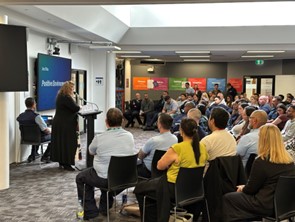
Ara Tika - Positive Environments Session
Increasing accountability with the Office of the Inspectorate
Over this quarter we’ve also seen the Office of the Inspectorate establish a new Inspection Standard to assess how well our leaders are actively promoting a safe, respectful and inclusive workplace culture. Inspection Standards describe the standards which prisons are expected to achieve, and guide inspectors to deliver independent and objective assessments.
Key indicators in the new standard include recognising and responding to sexual harassment, ensuring concerns are taken seriously, and fostering an environment where all feel safe to speak up. It also recognises the importance of building a culture where our people are confident that issues will be handled fairly and without retaliation.
By embedding our response to sexual harassment into the way inspections of our sites are carried out provides another mechanism by which we hold ourselves to account and work towards improvement.
Over 2,000 staff have completed one of our sexual harassment workshops
By now, many of you will have attended our Understanding and Responding Sexual Harassment and/or Skills for Sensitive Conversations about Sexual Harassment workshops, hosted by Alice Best, Senior Adviser Inclusion and Diversity.
In my September update, I mentioned that around 200 people had taken part. Since then, we’ve had over 2,000 staff participate in one of these workshops, which is nearly 20% of our workforce – great progress! This shows that there is real interest among our people in learning more and becoming champions for the elimination of sexual harassment at Corrections.
Over 90% of participants who provided feedback on the workshops said they had a better understanding about what sexual harassment was after attending. Nearly 90% said they felt they had more confidence to report sexual harassment, or to be an Upstander.
I strongly encourage you to prioritise attending these sessions as soon as you’re able. The purpose is not to lecture, but to invite our people to consider different perspectives and how we can work together towards change. You’ll find Alice to be an excellent facilitator who creates a safe and respectful environment for discussion. It’s also a great opportunity to meet with colleagues from other parts of the organisation.
There are a whole bunch of sessions already planned for the new year! You can find out the times and dates for upcoming sessions on Tātou.
Learning more about sexual harassment
You may have also seen two articles recently published on Tātou as part of a series focusing on different aspects of workplace sexual harassment, and our work to eliminate it.
We know that not all staff have a strong understanding of what sexual harassment is. There are many reasons for this, but what matters is that we all commit to treat each other respectfully. ‘What is Sexual Harassment?’ provides more information around what sexual harassment is, as well as what it is not.
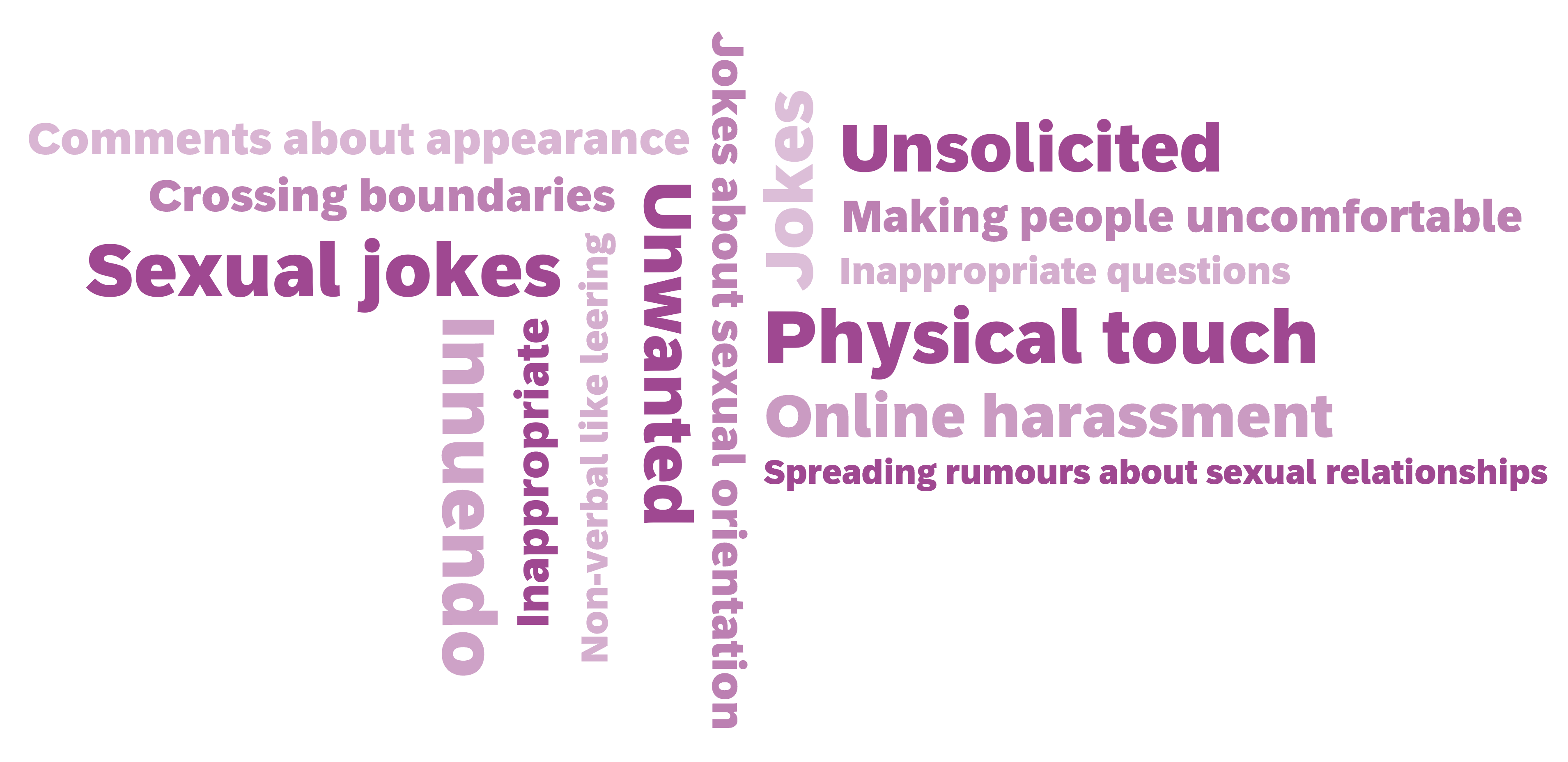
The second story, ‘Standing Up To Sexual Harassment’ focuses on how we can overcome the bystander effect by becoming Upstanders. Upstanders are people who speak or acts in support of an individual or cause, particularly someone who intervenes on behalf of a person being attacked or bullied.
We can all become Upstanders. We can all develop the confidence to step forward and speak out when we encounter unacceptable or inappropriate behaviours.
I look forward to seeing more of these useful and informative stories being shared with you on Tātou.
Measuring our progress
One of the most important things we can do in our work to eliminate sexual harassment is have robust data. As outlined in the 2024 Sexual Harassment review, about half of the staff surveyed (48%) did not agree that Corrections takes reporting of complaints seriously.
I believe that publishing anonymised high level data about the outcomes of formal complaints is one way that could show that complaints are taken seriously, with repercussions for people where a sexual harassment finding is upheld. Historically these complaints have not been centrally managed or recorded, but this is changing.
Work is currently underway to centralise and improve how we record complaints of workplace sexual harassment, as well as the actions taken following employment processes. Once the new system is in place in the new year, I am committed to regularly sharing anonymised data with you as an important step towards greater transparency and accountability.
Coming up in the New Year
I’m pleased to share that we have a number of important initiatives which we are planning to launch early next year. One of these is a visible, values-based staff awareness and behaviour change campaign which reinforces the expectation of a respectful workplace culture, and the elimination of sexual harassment. The campaign is being shaped by feedback from our Sexual Harassment Reference Group, made up of staff from across the organisation, and I want to thank them for their time and commitment to supporting our response.
Another important component of our response is the introduction of a revised Code of Conduct early next year. This provides the foundation for the behaviours and expectations which each one of us must act in accordance with. The revised Code will make clear that sexual harassment is unacceptable behaviour of anybody working at the Department of Corrections, and that we take this issue seriously.
As I’ve said before, change starts with us – in every moment, every interaction, and every choice. For more information on how to report a concern or access support, please visit our Sexual Harassment Tātou page.
If you haven’t already, I also want to encourage you to watch Jeremy’s statement on sexual harassment, where he sets his expectations as Chief Executive on sexual harassment in our workplaces.
I know many of you will now be looking forward to spending time with friends, family, and whānau during the festive season. I want to acknowledge all those who will be working over this time – your work to keep your colleagues and our communities safe is incredibly important. Thank you.
If you have any questions, please feel free to reach out to me directly. enjoy the festive season, and I look forward to seeing you in 2026.
Ngā mihi nui,
Rebecca
Ngā mihi nui,
Rebecca